
I Don't Know
Donald Trump sat for a 60 Minutes interview that aired on Sunday, November 2.
Let me start with this: school-age children should not be allowed to watch that interview. Not because of the language. Not because of the politics. Because of the posture. The orangutans, bonobos, and chimps at the National Zoo — the entire Great Apes wing, really — showed better posture, and frankly, better composure, than Donald Trump did Sunday night.
But posture aside, the real jaw-dropper came when Norah O’Donnell asked him about pardoning Changpeng Zhao, “CZ,” the crypto-billionaire behind Binance.
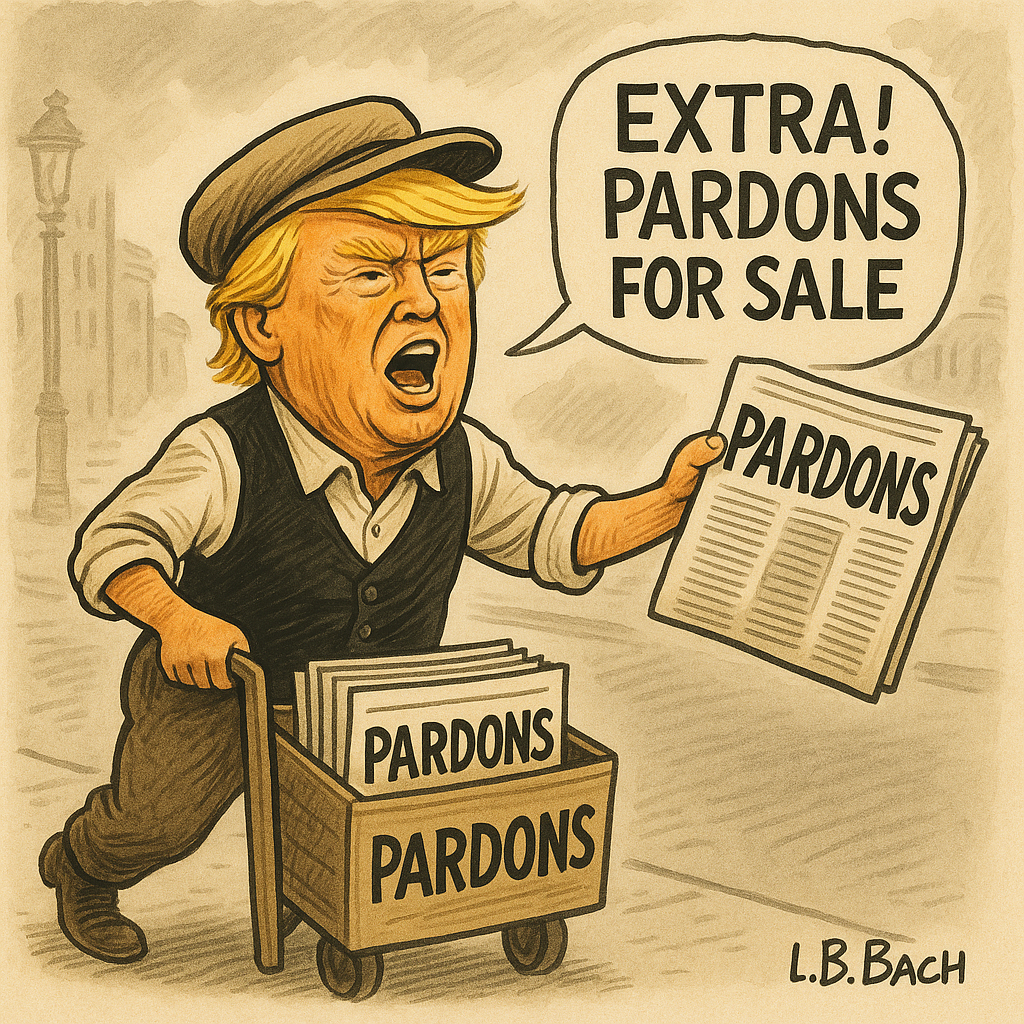
O’Donnell: “And you just signed the pardon of the man who led the Binance exchange. Does the public trust that this isn’t pay-for-play?”
Trump: “OK, are you ready? I don’t know who he is. I know he got a four-month sentence or something like that. And I heard it was a Biden witch-hunt.”
Trump (later): “Here’s the thing, I know nothing about it … My sons are into it. I’m glad they are, because it’s probably a great industry, crypto. … We are number one in crypto and that’s the only thing I care about. I don’t want China or anybody else to take it away.”
O’Donnell: “So you’re not concerned about the appearance of corruption with this?”
Trump: “I can’t say, because —I can’t say —I’m not concerned. I don’t —I’d rather not have you ask the question. But I let you ask it.”
That exchange wasn’t just embarrassing; it was instructive. It showed what happens when the press confuses proximity with accountability.
What Trump said out loud, “I don’t know who he is,” wasn’t new and it wasn’t accidental. It was the same play he’s been running for years: weaponized ignorance. What’s different is how routine it’s become, how unremarkable. He isn’t breaking new ground; he’s dancing on ground the press already softened for him. Each time he gets away with it, the line between incompetence and impunity blurs a little more.
He even dragged Joe Biden into the excuse, calling it “a Biden witch-hunt.” That was the moment O’Donnell could have shattered the routine with one question:
“So why is this different from what you accuse Joe Biden of?”
That single line would have broken the rhythm, cracked the performance mask, and exposed the absurdity. Instead, the moment passed, and with it another chance to remind power that it still answers to someone.
This isn’t new. Trump has said “I don’t know” about due process, about the Constitution, about people he’s pardoned, about his own policies. What’s changed is how easily we accept it. The political world shrugs: That’s just Trump.
But that’s the problem. Every time the press treats ignorance as personality instead of disqualification, the standard for leadership collapses a little further. The question isn’t why Trump keeps saying it; it’s why everyone else keeps pretending it’s normal.
When Ronald Reagan leaned on “I don’t recall” during the Iran-Contra hearings, the press didn’t shrug; they swarmed. The New York Times, The Washington Post, and CBS Evening News spent a week dissecting whether he was lying or senile. Even his defenders admitted it sounded guilty. Back then, ignorance was treated as a liability. Today it’s a branding opportunity.
Maybe that’s because the Fourth Estate traded its claws for credentials. Access journalism — the polished performance of pretending propaganda that is perspective purely to protect the pipeline — has turned watchdogs into lapdogs.” Access doesn’t inform; it anesthetizes. It trades courage for comfort, confrontation for civility. Every time a journalist pulls a punch to stay in the rotation, they’re not reporting, they’re performing.
Real journalism doesn’t need a backstage pass. It needs a backbone. Lose the invite. Ask the follow-up. Risk the exile. A free press that fears losing access has already forfeited its freedom.
Because every time a president says “I don’t know” and no one challenges it, the permission structure hardens. And every time we call that normal, we edge closer to a country where ignorance isn’t just tolerated—it’s policy.
If journalism means anything, it can’t mean access.
Access without accountability is complicity.
The Fourth Estate is the only profession with its own Constitutional Amendment.
Act like it.
I'm just saying.


Comments
Post a Comment